Sovol SV08 vs Creality K1: Which Klipper Printer Is Better Value?
Choosing between the Sovol SV08 and Creality K1 can be tough for high-speed Klipper users. This post dives deep into features, performance, and cost to help you decide which printer offers the best value.

Sovol SV08 vs Creality K1: Which Klipper Beast Gives You More Bang for Your Buck?
Alright, my fellow print-heads and entrepreneurs! Let's get real for a minute. You know that feeling, right? That buzz in the air when you see a new printer hit the market, promising warp speed and flawless prints? It’s like Diwali for us, every single time. And these Klipper-powered machines? Oh boy, they’ve absolutely changed the game. No more waiting an entire day for a medium-sized print! We’re talking hours, sometimes minutes. But for us here in India, especially those of us running small businesses like my ArtOpia Collections, every rupee counts, and "value" isn't just a buzzword – it's our bread and butter. So, when the Sovol SV08 dropped, making waves with its colossal build volume and CoreXY Klipper goodness, naturally, my mind went straight to the Creality K1. The K1, with its sleek enclosure and "ready to rocket" promise, has been a strong contender for a while. So, the burning question for me, and probably for you too, is: which one is actually the better *value* for our hard-earned cash? Let's break it down, friend to friend.The Klipper Revolution: Why It Matters
Before we dive into the nitty-gritty of these specific machines, let's just quickly touch upon Klipper. Honestly, if you're still running Marlin on a basic Cartesian printer and wondering why your prints are slow and sometimes a bit wobbly, you're missing out. Klipper basically turns your 3D printer into a finely tuned, high-performance race car. It offloads the heavy computational lifting to a separate board (usually a Raspberry Pi or similar), allowing for much faster print speeds, smoother motion, and incredibly precise control. Input shaping, pressure advance – these aren't just fancy terms; they mean less ringing, better cornering, and stronger, more accurate prints. For a business like mine, where consistency and speed directly translate to profits and happy customers, Klipper isn't a luxury, it's a necessity. We're talking about doubling, sometimes tripling, our production capacity without sacrificing quality. And that, my friends, is pure gold.Creality K1: The Speedy Enclosed Contender
Let's start with the Creality K1. When this thing first came out, it felt like Creality finally woke up and smelled the high-speed coffee. It’s compact, it’s enclosed, and it *looks* fast even when it's just sitting there. For an estimated street price of around ₹45,000 to ₹55,000 (depending on sales and where you grab it from, and let's be real, prices in India fluctuate like our monsoon rains), it brought high-speed Klipper printing in an enclosed package to a much wider audience.What I Love About the K1:
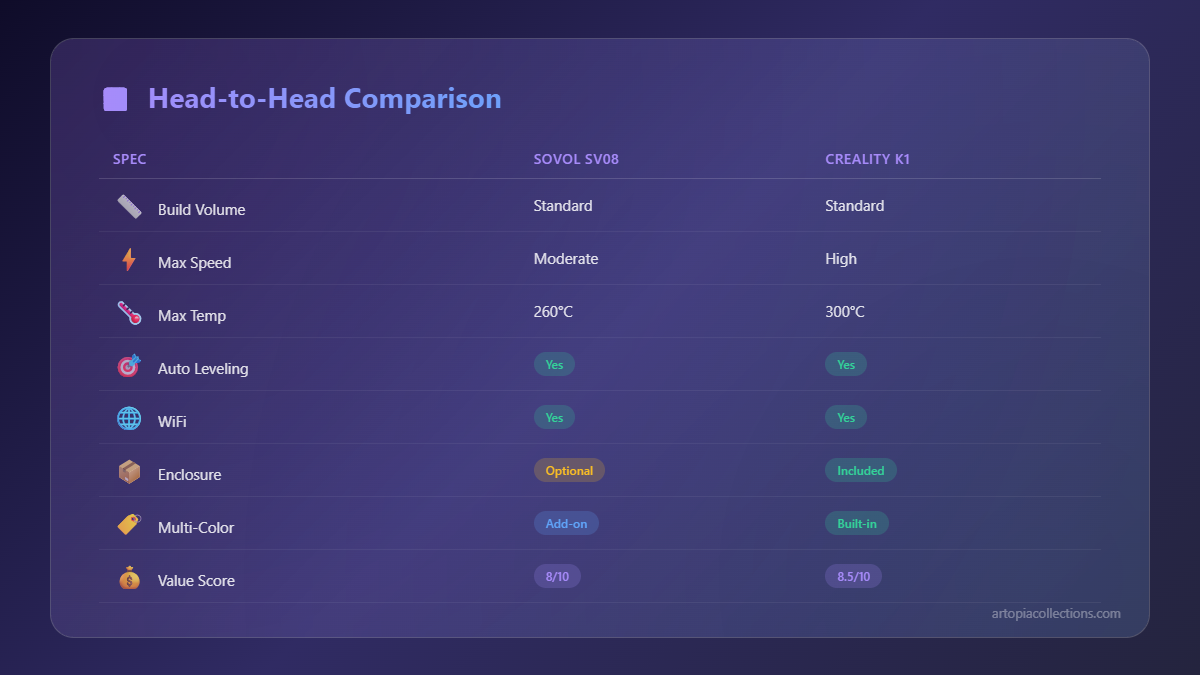
Firstly, the Creality K1 is pretty much ready to roll right out of the box. Minimal assembly, mostly just unwrapping and plugging in. For someone who just wants to hit print and get going, that’s a massive plus. My team and I? We appreciate not spending hours tinkering when deadlines are looming. The enclosure is a big deal too, especially for us here where ambient temperatures can swing wildly. Printing ABS, ASA, or even some PA-CF filaments becomes a much less stressful affair. Warping? Minimized. Smell? Contained. It’s brilliant for specialized, high-strength parts that need controlled environments. And let's not forget Creality's brand presence. They've got a huge community, support is generally available, and parts, though sometimes proprietary, are usually findable. The AI detection features, like spaghetti detection, are a neat touch, even if they occasionally freak out for no reason. (Seriously, I've had it pause a perfect print because it thought a tiny string of filament was the end of the world.)
Where the K1 Gives Me Pause:
Now, it's not all sunshine and rainbows. The K1's build volume, at 220x220x250mm, is decent for most standard parts, but for some of the bigger props or functional prototypes we create for ArtOpia Collections, it can feel a bit restrictive. You end up having to cut models, print in pieces, and then bond them, which adds post-processing time. Also, while Creality has ironed out many of the initial hotend and extruder issues, the closed nature of the machine can make upgrades or more advanced modifications a bit trickier than on open-source designs. You’re largely tied into their ecosystem, which can mean higher costs for replacement parts sometimes. And honestly, while it's fast, there's always that niggling feeling of whether you're getting the absolute most for the price, especially when you consider its smaller sibling, the K1C, or other offerings.
Sovol SV08: The Colossal CoreXY Challenger
And then came the Sovol SV08. This machine, oh man, this machine screams "workhorse." When I first saw its specs, my jaw just about hit the floor. A 400x400x500mm build volume? CoreXY kinematics? And Klipper out of the box? All for an introductory price that hovered around ₹40,000 to ₹50,000 (though, again, these are initial estimates and they can change *fast* in our market). It’s not enclosed, which is a significant difference from the K1, but its sheer size and potential are undeniable.Why the SV08 Has Me Excited:
The build volume of the Sovol SV08 is, without a doubt, its biggest selling point. For folks like us who occasionally need to print entire helmets, large architectural models, or even multiple medium-sized parts in one go, this is a game-changer. Imagine printing a large vase without having to split it! That saves so much time in design, printing, and post-processing. The CoreXY motion system is inherently more stable and capable of higher speeds and acceleration compared to traditional Cartesian printers, especially when scaled up. And with Klipper pre-installed, you're getting that high-performance immediately. It’s also much more open-source friendly. If you like to tinker, upgrade, or replace parts with standard, readily available components (which, let's be honest, saves a lot of headaches and money in the long run), the SV08 feels much more approachable. It’s a canvas for modification, which is something I deeply appreciate as an enthusiast.
The SV08's Realities (and Challenges):
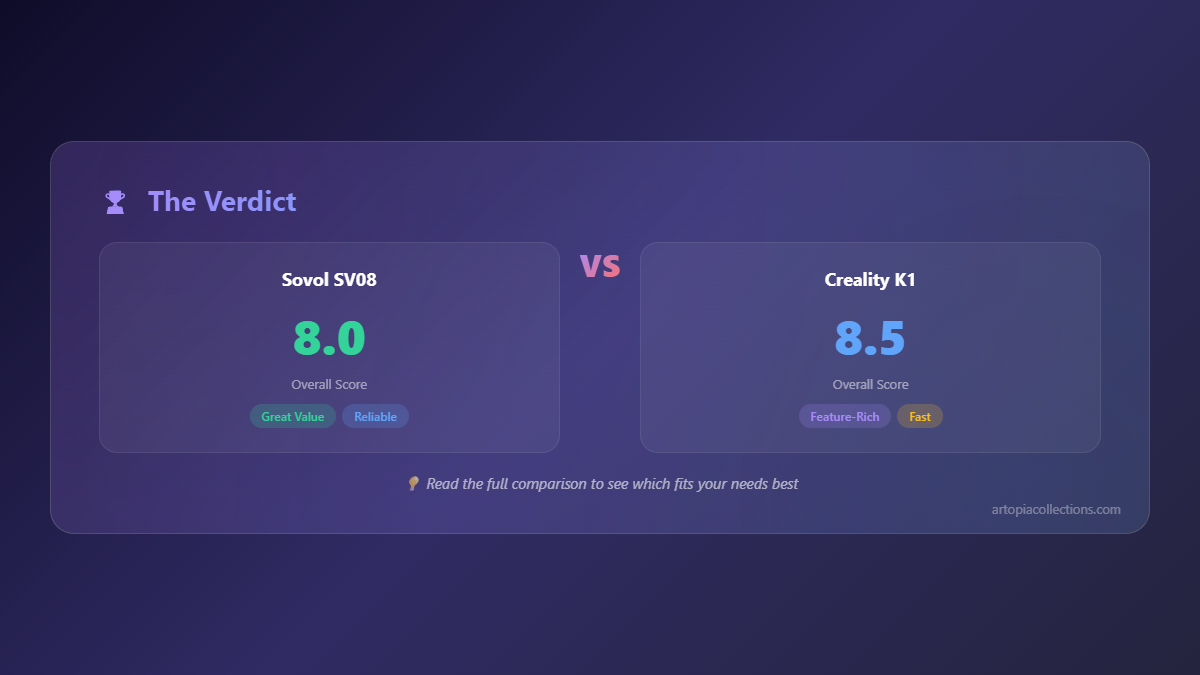
Now, let's talk about the elephant in the room – or rather, the lack of an elephant *enclosure*. Not having an enclosed build volume means printing materials like ABS or ASA in our typical Indian climate can be a real struggle. Warping becomes a constant battle, and inconsistent layer adhesion due to drafts is a genuine concern. You'll likely need to build a DIY enclosure if you plan on printing those trickier filaments consistently, which adds to the overall cost and footprint. The SV08 also requires some assembly. It’s not a full kit, but it’s definitely more involved than the K1. For a beginner, this might be a bit daunting. You really need to be comfortable with following instructions, tightening bolts, and making sure everything is square. And because it's a newer machine, the community support is still growing, though Sovol has a pretty decent track record. But here's the deal: its footprint is HUGE. You need dedicated space for this beast. It's not something you just plonk on a small desk.


