Is 3D Printing Worth It in 2026? Honest Cost-Benefit Analysis
Is 3D printing still a worthwhile investment for 2026? This honest analysis dives into the true costs, tangible benefits, and potential ROI to help you decide.

Chalo, let's talk real. It’s 2026, and I know what you’re thinking, because I hear it almost daily from folks who visit my little workshop here in Bangalore, or even just drop me a message online: “Vidyut, is 3D printing still worth it? Or is it just a fancy, expensive toy that’ll gather dust in a corner?” Man, that question hits close to home, because for me, it’s not just a hobby; it’s my bread and butter, my passion, my business. And honestly, the answer isn’t a simple yes or no. It's like asking if owning a car is "worth it"—depends on if you're commuting daily or just driving it once a month for groceries, right? So, let’s peel back the layers, my friends, and do an honest-to-goodness cost-benefit analysis from someone who's elbow-deep in plastic fumes and hot end woes every single day.
The Cost Side: What You're Really Shelling Out For (in INR, obviously)
Okay, let’s start with the hard numbers, because that’s usually the first roadblock people see. The initial investment, the ongoing expenses, the hidden costs… it all adds up. But here's the deal: it’s nowhere near what it used to be.
The Printer Itself: Your Gateway Drug
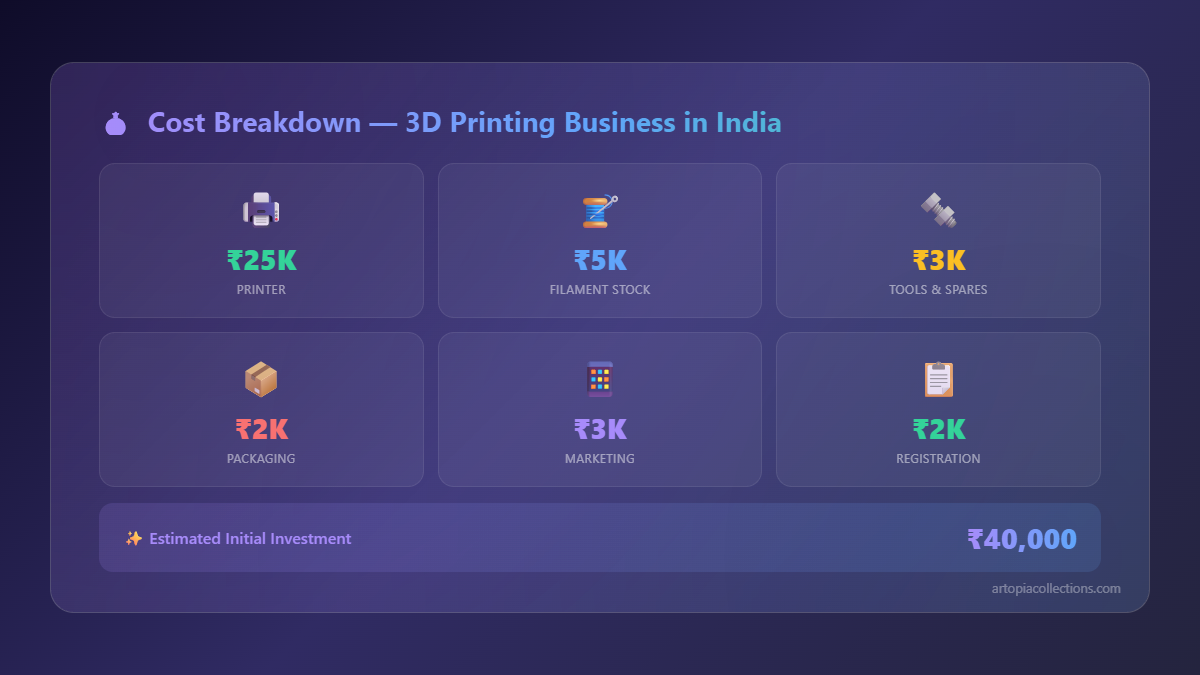
Back in the day, even a basic FDM (Fused Deposition Modeling) printer would set you back a pretty penny. We’re talking ₹70,000 to ₹1 Lakh for something barely functional. Thankfully, those days are long gone. In 2026, you've got some fantastic options:
- Entry-Level Workhorses (₹18,000 - ₹30,000): This is where most people start, and honestly, it’s a brilliant place. We're looking at machines like the Creality Ender 3 V3 KE or the Anycubic Kobra 2 Neo. These are significantly faster and more user-friendly than their ancestors. They come with features that were high-end just a few years ago – auto-bed leveling, decent print speeds, and often even Wi-Fi connectivity. They're perfect for hobbyists, students, or even small-scale prototyping. You’ll learn a lot with these, and they churn out surprisingly good quality prints once you dial them in.
- Mid-Range Powerhouses (₹40,000 - ₹80,000): Now we're talking about machines that blur the lines between hobby and semi-professional use. Think Bambu Lab P1S, or perhaps a more advanced Creality K1. These printers are *fast*, often enclosed (which helps with tricky materials like ABS), and generally more reliable right out of the box. They're for those who want more consistent results, faster production, or want to explore engineering-grade filaments. If you’re serious about starting a small business or doing complex projects, this is a sweet spot.
- High-End & Specialty (₹1 Lakh+): This is where things get serious. Industrial FDM, SLA (resin printers for incredible detail), or even multi-material systems. Unless you have a very specific business case or deep pockets for a serious workshop, you probably don’t need to start here. But hey, a man can dream, right?
Beyond the Box: Essential Accessories & Tools
Look, buying the printer is just the first step. You'll need a few bits and bobs, and while they aren't bank-breaking, they add up:
- Filament: This is your consumable. You can’t print without it. A good quality 1kg roll of PLA (Polylactic Acid), which is the most common and easiest to use filament, costs anywhere from ₹1,200 to ₹2,500, depending on the brand (eSun, Overture, or local Indian brands are all good). PETG (for more durability) might be ₹1,500-₹3,000. Special filaments like carbon fiber infused or glow-in-the-dark will be more. You’ll always need more. Always. It’s like a never-ending hunger. Here’s a good place to start stocking up: PLA Filament on Amazon.in.
- Tools: You’ll need a good scraper (to get prints off the bed), snips (for trimming supports), a set of Allen wrenches, perhaps some tweezers, and maybe a deburring tool. Most printers come with a basic kit, but better quality ones make life so much easier. Budget ₹500 - ₹2,000 for these.
- Build Plates: Your printer usually comes with one, but having a spare (like a PEI sheet or glass) is super handy. And they do wear out or get damaged. ₹800 - ₹2,500.
- Adhesives: Gluesticks, hairspray, or special build plate adhesives can help with bed adhesion. ₹100 - ₹500.
- Storage: Filaments absorb moisture, especially in our humid Indian climate. A dry box with desiccant or even a simple airtight container is crucial. ₹500 - ₹3,000.
The Unseen Costs: Maintenance, Electricity, and Your Time
Ah, the things nobody tells you about when you’re scrolling through shiny printer reviews:
- Maintenance: Nozzles wear out (₹150-₹500 for a pack of brass nozzles), hotends can clog, belts can stretch, and fans can fail. These aren't huge costs individually, but they are recurring. I personally factor in about ₹1,000 - ₹3,000 a month for maintenance across my farm of printers, depending on how heavily they're used. And let me tell you, troubleshooting a clogged hotend at 2 AM is a cost in itself—a cost to your sanity.
- Electricity: A typical FDM printer uses about 50-150 watts while printing, maybe more if it has a heated chamber. For an average print that takes, say, 10 hours, that’s 0.5 to 1.5 kWh. In India, with electricity costs varying, let’s say ₹5-₹10 per unit. So, a print might cost ₹5-₹15 in electricity. Not huge for a single print, but if you’re running multiple printers 24/7 like I do, it definitely adds up to a few thousand rupees a month.
- Your Time: This, my friends, is the biggest and most overlooked cost, especially if you’re planning a business. Designing, slicing, loading filament, troubleshooting failed prints, removing supports, post-processing (sanding, painting) – it all takes time. Valuable time. And time is money, particularly if you're an entrepreneur. You need to factor this into your pricing.
The Benefit Side: Is the Juice Worth the Squeeze?
Alright, so we’ve established that 3D printing isn't free. But what do you get for your hard-earned money and even harder-earned time? For me, the benefits have been a total game-changer, both personally and professionally.
For the Hobbyist & Maker: Unleash Your Inner Creator
If you're a creative soul, a DIY enthusiast, or just someone who loves tinkering, 3D printing in 2026 is an absolute dream. Here's why:
- Unlimited Customization: Want a specific phone stand shaped like a tiny Ganesha? Need a unique planter for your succulents? Or maybe some custom-fitted organizers for your desk? You can design and print it. The possibilities are genuinely endless. I’ve seen people print entire cosplay outfits, intricate scale models, and even parts for their RC planes.
- Prototyping & Iteration: Got an idea for an invention? A new gadget? Print a prototype in a few hours, see what works, what doesn't, tweak the design, and print again. This iterative process, which used to cost thousands and take weeks, now costs a few rupees in plastic and takes a day. It’s mind-bogglingly fast and efficient for innovation.
- Repair & Replacement: A broken knob on your washing machine? A lost battery cover for your remote? Often, you can find a replacement file online (Thingiverse, Printables, MyMiniFactory are goldmines) or design it yourself. It saves you money and reduces waste. I’ve saved so many household items from the trash bin this way.
- Learning & Skill Development: It's not just about pushing a button. You learn CAD software, understand material science, troubleshoot mechanical issues, and develop problem-solving skills. It’s an incredible STEM tool for all ages. My nephew, bless his little heart, is already designing rudimentary shapes at eight!
- Community: The global 3D printing community is vibrant and supportive. There are forums, Facebook groups, and local meetups (even virtual ones now!) where you can share projects, ask for help, and get inspired.
For the Small Business (Like My Artopia Collections): A True Revolution
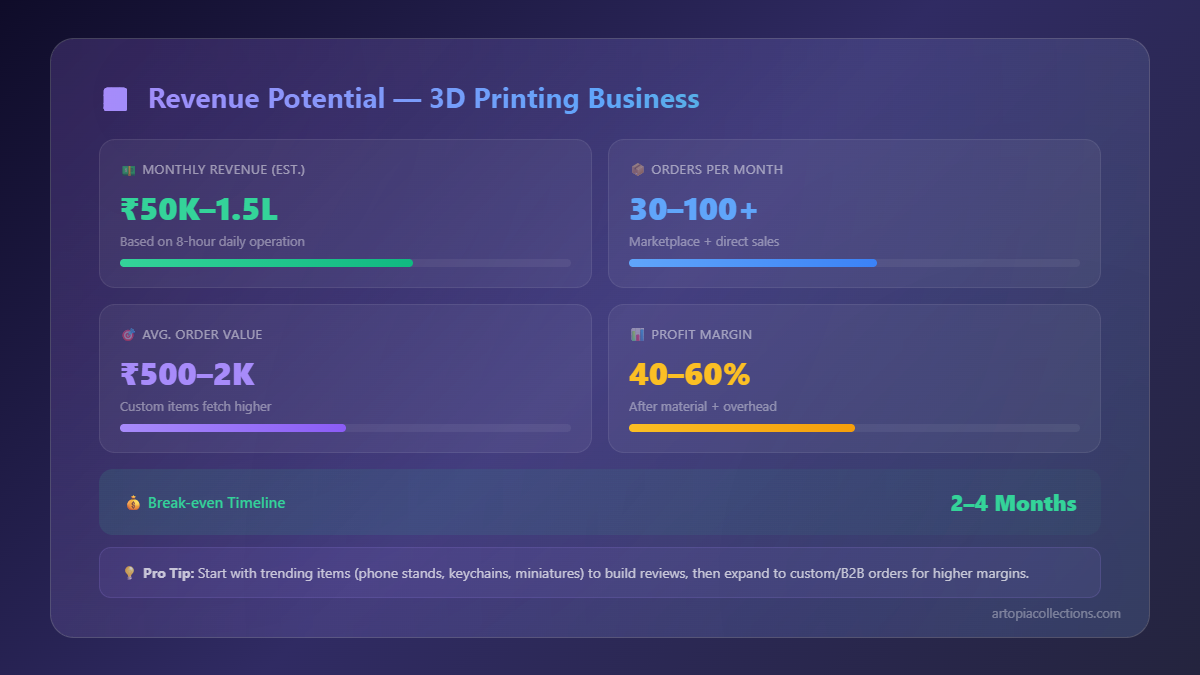
This is where my personal experience really shines. Running Artopia Collections wouldn't be possible in its current form without 3D printing. For small businesses, especially those in niche markets or looking to offer unique, custom products, it’s not just "worth it"—it's often essential.
- On-Demand Manufacturing: This is massive. I don't need to order 10,000 units of a product from a factory in China, tie up capital, and then hope they sell. I can print what a customer orders, when they order it. No massive inventory, no wasted stock. It’s incredibly lean.
- Customization & Personalization: This is my competitive edge. A customer wants a desk organizer with their company logo? Done. A personalized gift for a special occasion? Absolutely. 3D printing allows me to offer unique, tailored products that mass manufacturers simply can’t compete with on a small scale.
- Rapid Product Development: I can go from an idea sketch to a physical prototype in a day. Get feedback, refine, print again. This drastically cuts down the time and cost associated with bringing new products to market. What used to take months now takes weeks, sometimes even days. It's exhilarating!
- Niche Market Domination: Many of my products wouldn't be viable for traditional manufacturing due to low volume or complexity. 3D printing opens up these niche markets, allowing me to serve specific customer needs and build a loyal base.
- Cost-Effectiveness for Small Batches: While injection molding is cheaper for millions of units, 3D printing is incredibly cost-effective for batches from 1 to 1000. It allows small businesses to compete without needing massive upfront investments in tooling.
- Brand Story & Innovation: Being able to say that my products are designed and made locally, often customized for the customer, adds a powerful story to my brand. It resonates with people who value craftsmanship and innovation.
So, Is 3D Printing Worth It in 2026? My Honest Conclusion.
Alright, moment of truth. After all this rambling and a few too many cups of chai, is 3D printing worth it in 2026? My unequivocal answer is: YES, but with an asterisk. A big, glowing asterisk.
It’s worth it if you approach it with realistic expectations and a willingness to learn. It's not a magic box that prints money (though sometimes, it does print parts that make money!). It’s a tool, a powerful one, but a tool nonetheless, and like any tool, its value depends on the hands wielding it and the purpose it serves.
It's definitely worth it for:
- The curious hobbyist: If you love creating, tinkering, and solving problems, you’ll find endless joy and utility.
- The budding entrepreneur: If you have a vision for custom products, on-demand manufacturing, or rapid prototyping, 3D printing offers an accessible entry point to create and innovate.
- Educators and students: It's an unparalleled educational tool for STEM and design thinking.
- Anyone needing custom parts or repairs: The ability to make exactly what you need, when you need it, is invaluable.
It might not be worth it for:
- Someone expecting instant gratification without effort: There’s a learning curve. There will be failed prints. You need patience.
- Mass production of identical, simple parts: For millions of simple plastic widgets, injection molding is still king. 3D printing shines in complexity, customization, and low-to-medium volumes.
- Those unwilling to invest time: As I said, time is a huge cost. If you just want to press a button and walk away, you might get frustrated.
In my experience, 2026 is an incredible time to get into 3D printing. Printers are cheaper, faster, and more reliable than ever. The software is more intuitive. The community is huge. Materials are more diverse. And the applications? They're expanding every single day. From medical implants to affordable housing, from artistic sculptures to rocket components – 3D printing is not just a trend; it’s a foundational technology that’s reshaping how we design, produce, and consume.
So, should you dive in? If your heart is telling you "yes," and you're ready for a journey of creation, learning, and maybe a few frustrated sighs (followed by triumphant cheers!), then absolutely. Go for it. You might just find, like I did, that it’s one of the most rewarding investments you’ll ever make.


