3D Printed Pet Products: A Growing Niche on Amazon and Etsy
The market for 3D printed pet products is rapidly expanding on platforms like Amazon and Etsy. This post explores why this niche is thriving and what unique items pet owners are seeking.

Man, if someone told me a few years back that I'd be spending hours designing custom slow-feeder bowls for Pomeranians and tiny name tags for budgies, I probably would've laughed them right out of my little workshop. But here we are! My little venture, Artopia Collections, started with a passion for bringing ideas to life with plastic, and honestly, the pet product niche? It's been nothing short of a revelation. Forget your standard cookie cutters; pet parents in India, and worldwide, are hungry for unique, personalized stuff for their furry, feathery, or finned family members, and 3D printing is *perfectly* positioned to fill that demand. We're talking about a genuine goldmine on platforms like Amazon and Etsy, if you play your cards right.
I mean, think about it for a second. We're living in a world where pets aren't just pets anymore; they're bona fide family members. People spend a ridiculous amount of money on them – sometimes more than they do on themselves, I swear! And the beauty of 3D printing is that it lets us create things that are simply impossible or too expensive to mass-produce traditionally. This isn't just about printing a generic toy; it's about crafting a slow feeder perfectly sized for a Pug with a specific eating habit, or a name tag that matches the exact shade of their collar, or even custom aquarium decor that truly fits a theme. The customization factor is massive, and that's where we, as 3D printing enthusiasts and small business owners, truly shine.
So, Why 3D Printed Pet Products, Especially from India?
The thing is, the Indian market for pets is absolutely booming. I've seen it firsthand. More and more families are bringing pets home, and they want the best for them. But often, the specialized products available locally are limited, or they're imported and super expensive. This creates a fantastic opportunity for local makers like us. We can offer custom solutions at competitive prices, designed and manufactured right here in India. And then you add the global reach of platforms like Amazon and Etsy? That's when things get really exciting. You're not just selling to your city; you're potentially selling to someone in Germany who wants a specific dog breed keychain, or an American who needs a unique cat toy. The world is your oyster, or rather, your filament spool!
In my experience, setting up shop on Amazon.in for local sales, and then maybe Etsy for international, is a game-changer. Amazon's reach within India is unparalleled, and while the competition is fierce, the sheer volume of customers looking for unique items means there's always a slice of the pie for you. Etsy, on the other hand, is built for makers and handmade goods, and their international shipping options, while sometimes a bit of a headache (customs forms, oh my!), open up a massive global customer base willing to pay a premium for unique, custom-made items. The margins can be really good if you manage your costs properly.
What Kind of Pet Products Are We Talking About? The Ideas Are Endless!
Honestly, this is the most fun part. The brainstorming! I've experimented with so many things, and what consistently sells are items that are either highly functional, deeply personal, or just plain adorable. Here are a few categories that I've found to be particularly promising:
1. Custom Pet ID Tags & Name Plates
This is probably the easiest entry point for anyone looking to get into the niche. Everyone with a pet needs an ID tag, right? And mass-produced ones are, well, boring. With 3D printing, you can offer tags in any shape, size, color, with their name, a phone number, even a tiny paw print debossed or embossed. I personally use a lot of durable PETG for these, or sometimes PLA if the customer wants something lighter and less likely to clink. You can print them for maybe ₹5-₹15 in material cost, and easily sell them for ₹150-₹300, sometimes even more for intricate designs. And the best part? It's quick to design and print. It’s also a great way to use up those smaller bits of filament you have lying around!
2. Slow Feeder Bowls & Inserts
 My dogs, bless their hearts, inhale food like it's their last meal. Many vets recommend slow feeders to prevent bloat and improve digestion. Traditional slow feeders can be clunky, hard to clean, or not quite right for a specific breed. Here's where we come in! You can design custom maze patterns, different depths, and sizes. This is a functional product that pet parents actively seek out. I've seen some fantastic designs online that inspired me. You can either print entire bowls (which can be filament-intensive) or, a smarter move, just print inserts that fit into existing standard bowls. I use food-safe PETG for these, always. A full slow feeder bowl might take about 100-200g of filament (say, ₹200-₹400 in material), but you can easily sell it for ₹800-₹1500, especially if it's customized.
3. Aquarium & Terrarium Decor
Okay, this one's a bit different, but it's a huge market! Fish owners and reptile enthusiasts love to create unique environments for their pets. Think about it: ancient ruins, sunken ships, natural-looking caves, custom hideouts for lizards, basking platforms for turtles. All of these can be 3D printed! The key here is using aquarium-safe filament like PETG, and making sure there are no sharp edges. You can get really creative with textures and colors. A cool cave for a fish tank might cost you ₹50-₹100 in filament and sell for ₹300-₹800. It's a fantastic niche because the products are often display items, so aesthetics matter a lot, and that's something 3D printing excels at.
4. Enrichment Toys & Chewables (with a HUGE caveat)
 This is where things get a little tricky, but the potential is there. Dogs and cats need mental stimulation. Treat dispensers, puzzle toys, and interactive feeders are popular. Now, the big caveat: if you're making chew toys, you absolutely MUST use pet-safe, non-toxic, and durable materials like TPU (flexible filament). And even then, you need to be super clear with your customers about supervision, because no 3D print is truly indestructible against a determined chewer. Pieces breaking off can be a choking hazard. So, I mostly stick to treat dispensers that are harder to chew or puzzle toys that need interaction rather than brute force. Safety first, always! But hey, a custom-designed treat dispenser for a cat could be a cool seller. You're looking at ₹50-₹150 in material, selling for ₹250-₹600.
5. Personalized Pet Gifts & Memorials
People love celebrating their pets, and sadly, they also grieve for them. Custom pet portraits (3D printed lithophanes are amazing here!), paw print art, memorial plaques, or even figurines of their pet are incredibly touching and unique gifts. These items are often high-value because of the emotional connection. I've done a few custom lithophanes as gifts, and the reactions are priceless. A lithophane costs barely ₹20-₹50 in filament, but the design work and the emotional value mean you can charge ₹400-₹1000 easily. This is definitely a higher-margin product category.
And you know, we actually make some really cool custom stuff at Artopia Collections that ties into this personalization idea. It’s all about making something truly unique.
Filament Choices and Printer Talk: What I Use & Recommend
For most pet products, especially those that come into contact with food or water, I predominantly use PETG filament. It's more durable than PLA, has better temperature resistance, and many brands are considered food-safe (though always do your own research for specific certifications!). It's a little trickier to print with than PLA – more stringing, needs higher temps – but once you dial in your settings, it's fantastic. A good 1kg spool of PETG usually costs me anywhere from ₹1800 to ₹2500, depending on the brand and color. For decorative items or things that won't be chewed or get wet, PLA is perfectly fine and super easy to work with. I usually get my PLA for around ₹1500-₹2000 a kg. And for those flexible parts, TPU filament is the way to go, but it prints very slowly and can be challenging for beginners. Prices for TPU are usually in the ₹2200-₹3000 range per kg.
In terms of printers, I started with a trusty Creality Ender 3 V2 – it's an absolute workhorse for the price (usually around ₹18,000-₹25,000). It's a great entry-level machine that can produce surprisingly good results once you've learned its quirks. As my business grew, I upgraded to something a bit more reliable and faster for production, but the Ender 3 series is still fantastic for getting started. If you're serious, a Prusa i3 MK3S+ (though quite a bit more expensive, closer to ₹80,000-₹1L) is a dream, but you don't need that to begin. Any decent FDM printer with a build volume of at least 200x200x200mm will get you going.
Pricing, Marketing, and Standing Out
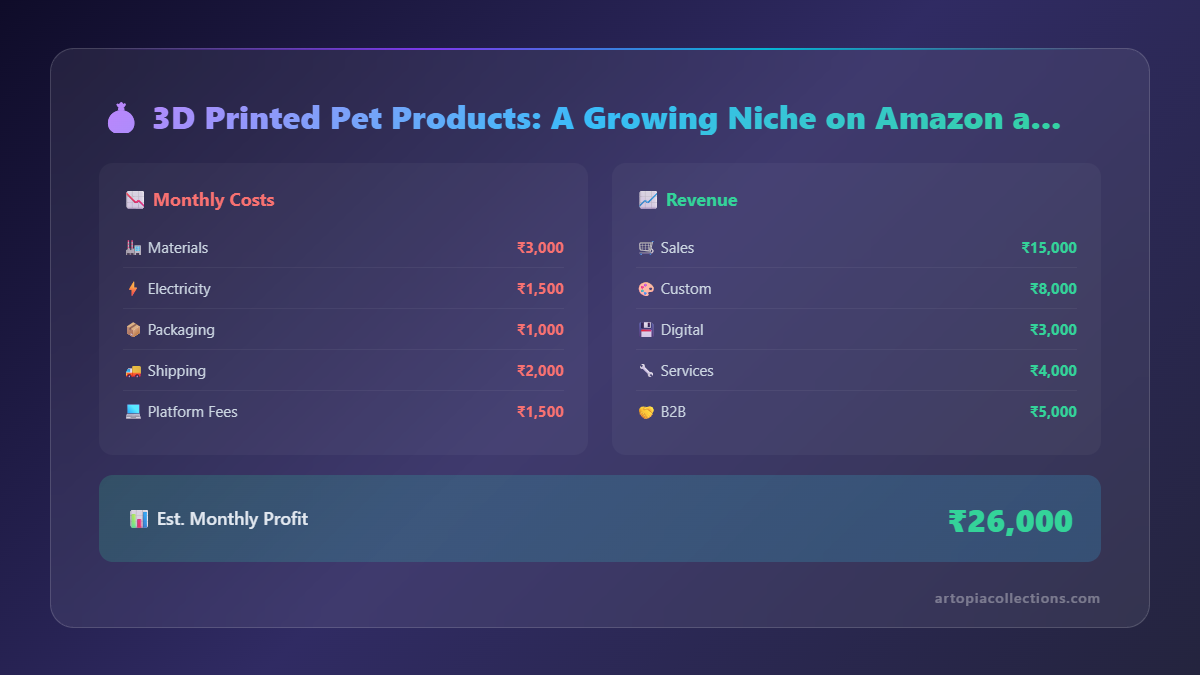
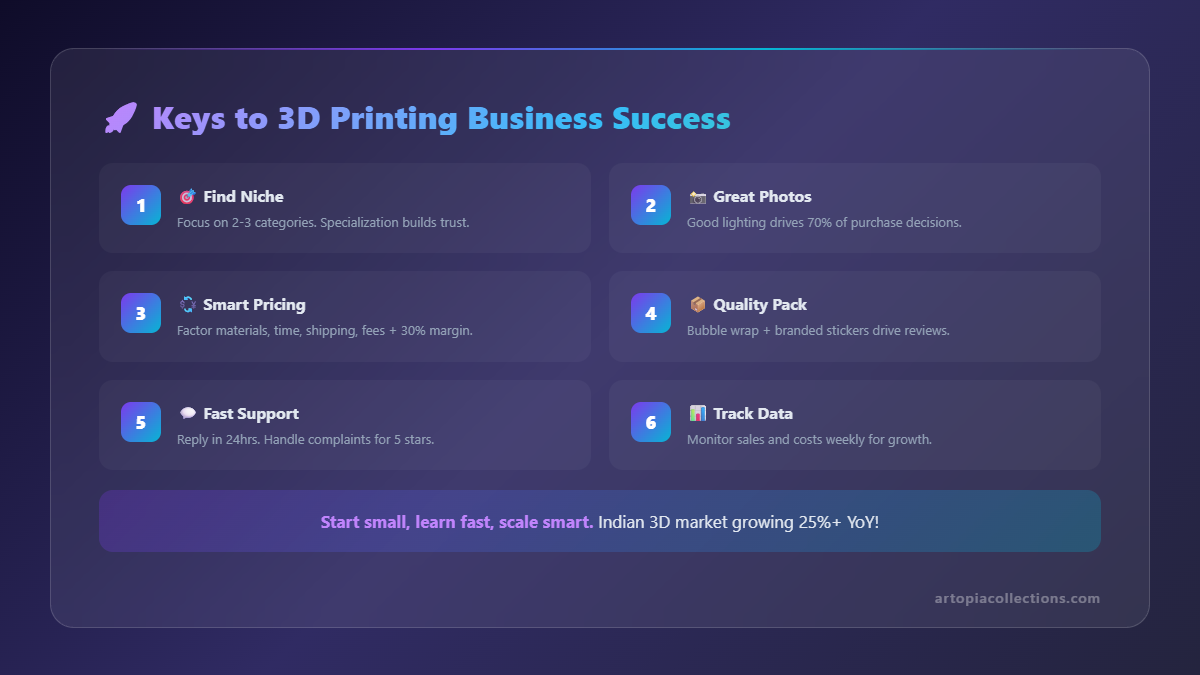
This is where the business hat really comes on. Pricing your products correctly is crucial. You need to factor in:
- Material cost (filament, supports, failed prints)
- Electricity cost (printers consume power!)
- Your time (design, printing, post-processing, packaging)
- Platform fees (Amazon, Etsy take a cut)
- Shipping costs (packaging materials, courier charges)
- Your profit margin (gotta eat, right?)
Don't undervalue your work! People are paying for unique, custom-made items, not mass-produced plastic. I typically aim for a 3x to 5x markup on my material and time costs for custom items. For instance, a pet tag that costs me ₹20 in filament and ₹50 in time might sell for ₹250-₹300.
Marketing is all about good photos and clear descriptions. Get natural light, use a cute pet model if you can (or even your own!), and highlight the customization options. On Etsy, good tags are vital. On Amazon, a strong product title and bullet points that emphasize the benefits (e.g., "slows down eating," "personalized gift," "aquarium-safe") will help you get discovered.
Challenges & How I Tackle Them
It's not all rainbows and perfectly printed unicorns (or, well, puppies). There are definitely challenges:
Durability & Safety: As I mentioned, this is paramount. Always, always prioritize pet safety. Test your designs. Be transparent with customers about materials and usage. I've had to scrap a few design ideas because they didn't meet my safety standards, and that's okay. Better safe than sorry, and losing a reputation over a broken product is just not worth it.
Competition: The market is growing, so you need to differentiate yourself. Offer unique designs, exceptional customer service, or specialize in a very specific niche (e.g., only bird toys, or only custom cat furniture).
Shipping from India: For international orders, shipping can be a bit of a maze. Packaging needs to be robust, and customs declarations have to be accurate. I use reliable courier services that handle international shipping, and I factor those costs into my pricing. Within India, services like Delhivery or India Post are generally quite good and affordable.
Time Investment: 3D printing isn't "set it and forget it." Design work takes time, printing takes time, post-processing (removing supports, sanding a bit) takes time. You need to manage your workflow efficiently, especially when you start getting multiple custom orders.
My Takeaway: A Niche Worth Exploring!
Honestly, if you're a 3D printing enthusiast in India looking to turn your hobby into a side hustle, or even a full-time gig like me, the pet product niche is a fantastic place to start. It's creative, rewarding, and there's a real demand for what we can offer. The satisfaction of seeing a customer's happy pet with something you designed and printed? That's just priceless. It's more than just plastic; it's about bringing joy to both pets and their humans. So, grab your printer, load up some filament, and start thinking about what awesome thing you can create for the animal lovers out there. The market is waiting, trust me!
Happy printing, my friends!


